How Many Times Can You Actually Rewear an Outfit Before Anyone Notices? The Numbers Might Surprise You
Here's a scenario. You wore that rust-colored midi dress to your coworker's birthday dinner three weeks ago. You loved how you felt in it. You want to wear it again — but something stops you. Some invisible social contract that says too soon, too obvious, too much.
I'm here to tell you that invisible contract is made up. And I have numbers to back it up.
The anxiety around outfit repetition is one of the most pervasive — and most irrational — things we carry around in our style lives. So let's actually look at this. Let's put some real figures on it and figure out what's driving the panic, who's actually paying attention, and what you can safely rewear without a single person blinking.
Spoiler: it's almost everything, almost all the time.
The Core Problem: You Think Everyone Is Watching. They're Not.
Psychologists have a name for this. It's called the spotlight effect — the deeply human tendency to believe other people are noticing us far more than they actually are. Studies out of Cornell University found that people consistently overestimate how much others observe and remember about their appearance, sometimes by a factor of two or three.
In plain terms? You think your coworkers clocked your outfit. They were thinking about their lunch order.
This isn't a dig at anyone's social awareness. It's just how attention works. People are occupied with their own lives, their own anxieties, their own mental to-do lists. Your blouse is genuinely not on their radar the way it's on yours.
Once you internalize that, the whole outfit-repeat calculus changes.
Breaking It Down by Social Circle
Not all repeat situations are equal. The risk level — such as it is — shifts depending on who you're around and how often you see them. Here's how to think about it.
At Work
This is where most people feel the most self-conscious, and it's also where repetition is the most normalized. Think about it: your colleagues see you more than almost anyone else in your life. Of course you're going to cycle through your wardrobe. That's just math.
A reasonable baseline? You can comfortably rewear a full outfit — same top, same pants — every two to three weeks without it registering for most people. If you're mixing and matching, that window shrinks to one to two weeks, because no one is tracking your separates the way they might track a distinctive dress.
The exception: if you work in a visually oriented field like fashion, styling, or media, your colleagues may be more attuned to what you're wearing. Even then, rewearing is increasingly celebrated in those spaces.
With Friend Groups
Friends see you less frequently than coworkers, which actually extends your repeat window significantly. If your friend group gets together once a week, you can wear the same outfit every three to four appearances without anyone making a mental note. That's over a month of casual dinners, brunches, and hangouts before you'd even need to think about it.
Close friends who see you multiple times a week? They genuinely do not care. If anything, they know what you love and associate certain pieces with you in a warm, familiar way.
On Dates
This one trips people up the most, but the logic is simple. If you're going on a second or third date with someone new, they're focused on you — your energy, your conversation, whether you laughed at their joke. They are not running a mental inventory of what you wore last Tuesday. Wear the dress that makes you feel incredible. That confidence will always land harder than novelty.
With Family
Honestly? Family is the freest zone of all. Wear whatever you want, as many times as you want. If your mom notices, she's going to tell you the piece looks great on you. That's the whole dynamic.
Which Clothing Categories Are the Safest Bets for Repeating
Not every item carries the same repeat risk. Here's a quick breakdown of where you have the most freedom.
Basics and Neutrals — The lowest-visibility category. A white button-down, a black turtleneck, dark-wash jeans. These pieces blend into the visual background. People don't clock them as outfits — they just register as dressed. Repeat these as often as you want.
Bottoms — Pants, skirts, and trousers are dramatically under-noticed compared to tops. You can wear the same pair of wide-leg trousers twice a week and no one will connect the dots, especially if your tops are different.
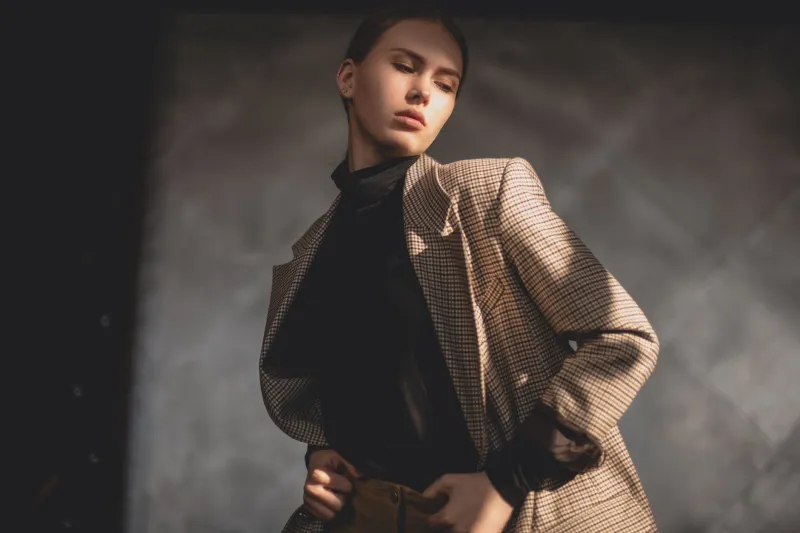
Blazers and Outerwear — These function more like accessories in the public eye. A great blazer worn over different tops reads as a new outfit every single time.
Statement Dresses and Bold Prints — These are the pieces people actually remember, because they're visually distinctive. Even here, though, the two-to-three-week rule applies in most social contexts. Styling them differently — different shoes, different hair, different accessories — creates enough visual variation to reset the clock entirely.
Occasion Wear — Wedding guest outfits, formal looks, event pieces. You wore it once, to a specific event, with a specific group of people. The odds of significant overlap at the next occasion are low. Wear it again.
The Restyling Multiplier
Here's the variable that changes everything: how you style a piece matters more than how often you wear it. A leopard-print wrap dress worn with block-heeled mules and gold hoops reads completely differently than the same dress belted, layered under a denim jacket, with white sneakers. Same dress. Completely different outfit.
This is the styling trick that makes repeat-wearing not just acceptable but genuinely undetectable. Swap the shoes. Change the bag. Add or remove a layer. Do your hair differently. The piece is the same; the look is new.
Why We Still Feel Weird About It
Even knowing all of this, the anxiety lingers for a lot of people. And it's worth naming where that comes from.
Fast fashion culture spent decades conditioning us to equate novelty with value — to believe that being seen in the same thing twice was somehow a failure. That's a purchasing psychology, not a style philosophy. It was designed to make you buy more, not to actually serve your wardrobe or your life.
The most stylish people — the ones who always look effortlessly put together — are almost always repeat wearers. They've found pieces they love, and they wear them. That's it. That's the whole secret.
The Real Calculation
So here's the actual math, simplified:
- Basics and neutrals: No limit. Wear them constantly.
- Bottoms: Two to three times a week, easy.
- Blazers and layers: Effectively unlimited with different base outfits.
- Statement pieces: Every two to three weeks per social circle, or sooner with restyling.
- Occasion wear: Wear it again. Always.
The only number that actually matters? How many times you feel great in something. That's the metric worth optimizing for.
Your clothes are not a one-use resource. They're an investment in how you show up — and showing up confidently in something you love is always the right call, whether it's the first time or the fifteenth.