The Power of Fewer: Why the Most Stylish People You Know Wear the Same Things on Repeat

There's a woman in your life who always looks effortlessly pulled together. She walks into the room and something about her just works. But if you pay close enough attention, you'll notice something interesting: she's been wearing those same dark-wash straight-leg jeans since Tuesday. And somehow, every single time, the outfit lands.
She's not fashion-lazy. She's not broke. She's not out of ideas.
She's onto something the rest of us have been too distracted — or too influenced by sale emails and TikTok hauls — to figure out.
The Myth of Variety
American consumer culture has a very specific story it tells us about fashion: more is more. More options mean more creativity. More pieces mean more outfits. More shopping means better style.
But here's the thing — that story was written by retailers, not stylists.
The truth is that variety can actually be the enemy of a great wardrobe. When you're standing in front of a closet stuffed with options, you're not empowered. You're overwhelmed. Decision fatigue is real, and it hits hardest when you're already running late and trying to figure out what to wear.
The people who consistently look good? They've quietly opted out of that cycle. They've built something smaller and sharper — and it shows.
What Luxury Fashion Already Knows
High fashion has understood this forever. Think about the way French style is discussed in basically every fashion magazine ever published. The whole mythology of the "French woman's wardrobe" is built on restraint: a few exceptional pieces, worn constantly, styled with intention.
Luxury brands like The Row, Toteme, and Loro Piana aren't selling you a closet full of stuff. They're selling you the idea that one incredible piece can anchor your entire look. Their customers aren't buying five versions of a blazer — they're buying the blazer, and then wearing it everywhere.
Minimalist fashion advocates have been preaching this gospel for years, too. The capsule wardrobe concept, at its core, isn't about restriction — it's about curation. It's about knowing your pieces so well that getting dressed becomes almost automatic, and the results are consistently good because you've already done the editing work in advance.
The Psychology Behind the Repeat
Here's something worth sitting with: when you wear a piece repeatedly, you stop second-guessing it. You know how it moves. You know what it pairs with. You know it looks good because you've already worn it and felt confident in it.
That confidence is visible. It's the difference between someone who looks like they got dressed and someone who looks like they meant to get dressed.
There's also a comfort factor that gets underrated in fashion conversations. Clothes you've worn before are clothes you trust. You're not spending mental energy worrying about whether the waistband is going to roll or the fabric is going to wrinkle weirdly by noon. You already know. And that freedom — that low-key certainty — translates directly into how you carry yourself.
Psychologists have a term for the mental load of too many choices: decision fatigue. By the time you've waded through a packed closet every morning and finally landed on something, you've already spent cognitive energy that could've gone somewhere else. A tighter rotation short-circuits that drain entirely.
Building Your Rotation (Without It Feeling Like a Uniform)
The goal isn't to wear the exact same outfit every day like you're a cartoon character. The goal is to identify the pieces that genuinely work for your life and your body, and then lean into them hard.
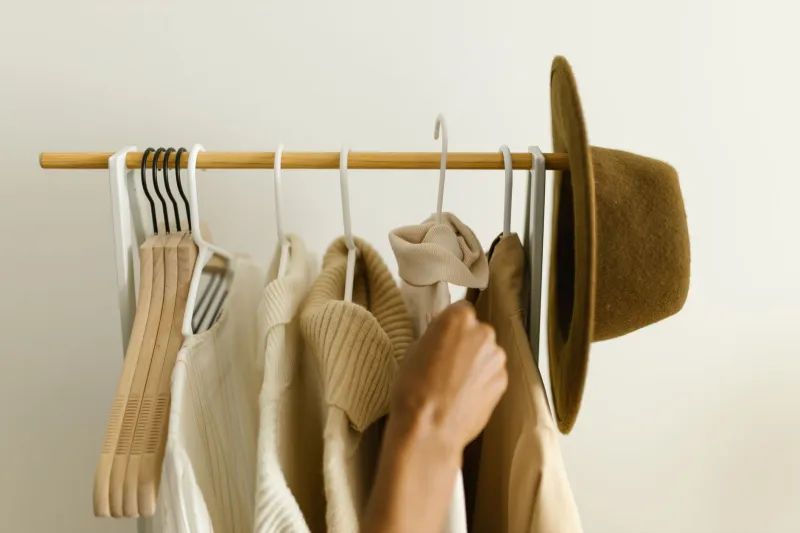
Start by paying attention to what you actually reach for. Not what you bought with good intentions, not what's been sitting unworn with the tags on — what you actually grab when you're running out the door and need to feel good fast. Those are your anchors.
For most people, this ends up being somewhere between five and ten pieces. A great pair of jeans. A few tops that work in multiple contexts. A jacket that elevates anything underneath it. A shoe situation that doesn't require thought.
Once you know your anchors, the styling work gets interesting. The same dark jeans that showed up with a tucked-in white button-down on Monday can reappear with an oversized crewneck and sneakers on Thursday and feel completely different. You're not repeating an outfit — you're remixing a piece you've already vetted.
The Real Flex Is Caring Less About Novelty
There's a quiet confidence in not needing to show up in something new every time. It signals that you're dressing for yourself, not for the approval of whoever might notice you've worn those pants before.
And honestly? Most people don't notice. We're all too busy thinking about our own outfits.
What people do notice is when someone looks consistently good. When there's a coherence to how a person presents themselves. That kind of style reads as intentional — and intention is always more compelling than novelty.
Your stylish friend with the three-times-a-week jeans isn't just managing her wardrobe efficiently. She's made a subtle but powerful statement: she knows what works for her, she's not chasing trends for the sake of it, and she's too busy living her life to stress about outfit variety.
That's not a limitation. That's a flex.
Where to Start If Your Closet Is Still the Problem
If you're reading this from the middle of a closet that's full but somehow never has anything to wear in it, the fix isn't a shopping trip. It's an editing session.
Pull out everything you've worn in the last 30 days. That's your actual wardrobe — the rest is just furniture. Look at what you've been gravitating toward and ask yourself why those pieces work. Is it the fit? The color? The versatility?
Then look at what's collecting dust and be honest about whether it's ever going to make it into regular rotation. Donating or consigning pieces that don't serve you isn't giving up on fashion — it's making room for the stuff that actually does.
The goal is a closet where almost everything you own is something you'd happily reach for on any given morning. That's not a small closet. That's a smart one.
And if you need help figuring out which pieces are worth investing in for your own tight rotation, that's exactly what we're here for at Angela Boyd. Style that speaks — and keeps speaking, outfit after outfit after outfit.