Your Phone Camera Is a Liar: The Truth About Fit-Checking Your Outfits
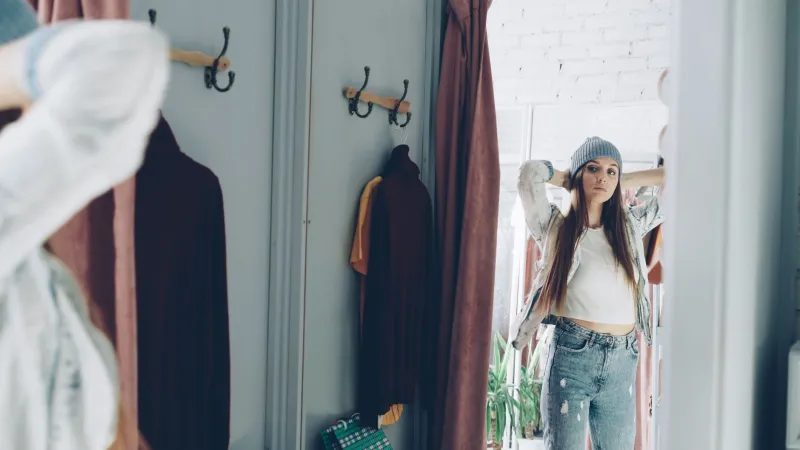
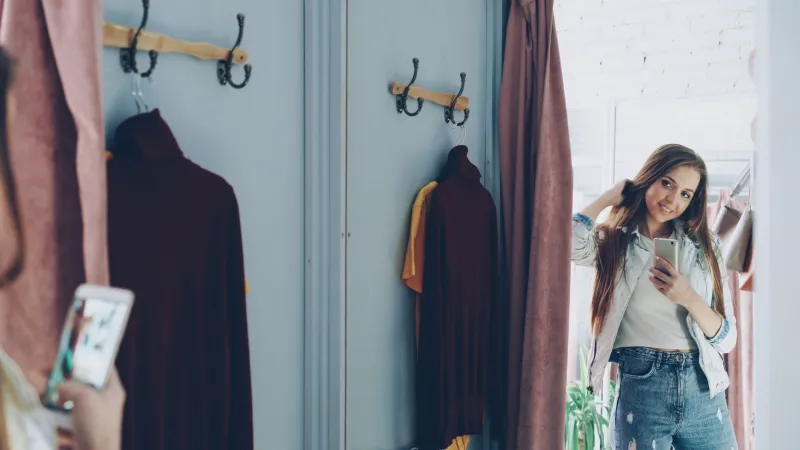
Okay, real talk. How many times have you stood in a dressing room, held your phone up at that specific angle — you know the one — snapped a pic, thought yes, this is the one, and then brought the piece home only to wear it exactly zero times? Same. And honestly? It's not entirely your fault.
We've been trained to trust the fit-check selfie like it's gospel. Post it to your Stories, send it to your group chat, get the green light from your bestie, and boom — purchase justified. But here's the thing nobody's really talking about: your phone camera, combined with dressing room lighting and your very human instinct to find your best angle, is giving you a completely distorted picture of how that piece actually looks on your body in real life.
Let's break down exactly what's happening — and how to fix it.
The Physics of a Bad Dressing Room Selfie
Dressing room lighting is almost universally terrible. Most retail stores use overhead fluorescent lighting that casts downward shadows, flattens your features, and drains color from fabric. That gorgeous emerald blazer that looked rich and vibrant on the rack? Under those lights, it can look washed out and lifeless. Meanwhile, a poorly cut pair of pants might look totally fine because the harsh overhead light is doing weird things to the shadows.
Then there's the camera itself. Wide-angle lenses — which are standard on most smartphone front cameras — distort proportions at close range. Hold your phone at arm's length and everything in the center of the frame gets slightly enlarged while the edges compress. Depending on how you're standing, this can make a jacket's shoulders look broader than they are, or make a midi skirt look shorter than it hits in real life.
And let's not even get started on the angle game. We all tilt our phones slightly upward. We shift our weight to one hip. We angle our bodies just so. All of that is completely natural, but it also means you're not seeing the garment the way anyone else will when you walk into a room.
What "Real Life" Actually Looks Like
Here's the honest truth: the way you look in a dressing room selfie and the way you look walking down the street are two entirely different things. Real life involves movement. It involves other people's eye levels. It involves natural light from multiple directions, not a single overhead source blasting down on your head.
When you move in a garment — sit down, reach for something, walk a full block — that's when you find out if it actually fits your body or just looks like it fits in a static photo. A waistband that photographs beautifully might gap at the back when you sit. A structured blazer that looks polished in a selfie might pull across the shoulders the moment you reach for your coffee.
The fit-check selfie captures a single, curated moment. Your life is not a single, curated moment.
How to Actually Evaluate a Piece Before You Buy
So what do you do instead? A few strategies that genuinely work:
Move around — a lot. Before you even think about taking a photo, put the garment through its paces. Sit down on the dressing room bench. Raise your arms. Walk back and forth. Bend over to pretend you're picking something up. If it's a skirt or pants, check what happens when you take a full stride. A piece that survives all of that is a piece worth considering.
Step outside the dressing room. I know, I know — it feels awkward. But most retail stores have better lighting in the main floor area than in the fitting rooms. If you can step out and look in a larger mirror under different light, do it. You'll see the garment completely differently.
Ask for a second opinion from a stranger. This sounds wild, but hear me out. A fellow shopper has zero emotional investment in your purchase decision. Your group chat wants to be supportive. A random woman in the shoe aisle at Nordstrom will tell you the truth.
Check the back — always. We are so focused on the front view in selfies that we completely neglect what's happening behind us. Turn around. Use two mirrors. The back of a garment tells you a lot about whether it actually fits your body.
Recreating Honest Light at Home
If you're shopping online — which, let's be real, most of us are doing constantly — you need a reliable way to evaluate pieces after they arrive. The goal is to replicate natural daylight as closely as possible.
The best setup? Stand near a large window during the day with the light coming from the side rather than directly behind or in front of you. Side lighting shows texture, drape, and fit far more accurately than a front-facing window (which backlights you) or a lamp across the room (which creates weird shadows).
For phone photos, flip to your rear camera instead of the front-facing one. Yes, it's harder to control. Yes, you'll need to prop your phone up or ask someone to take the shot. But rear cameras have better lenses with less distortion, which means what you see is much closer to what everyone else actually sees.
And if you want to invest in one genuinely useful tool: a full-length mirror with a daylight-balanced LED strip along one side. You can find them for under $60 on Amazon, and the difference in how accurately you see color and fit is significant.
The Bigger Picture
There's something worth sitting with here: we've outsourced our style instincts to an algorithm and a camera lens. We've started trusting the photo over what our own body is telling us — whether something feels right, moves right, and actually makes us feel like ourselves.
The most stylish people I know? They barely take dressing room selfies. They try things on, they move, they feel the fabric, they check the mirror from a few steps back, and then they make a decision based on all of that — not a single filtered snapshot.
Your phone is a great tool for a lot of things. Evaluating whether a garment actually fits and flatters your real, three-dimensional, moving body? That's not really one of them.
Trust your gut more. Trust your camera less. Your wardrobe will thank you.