Your Clothes Don't Have an Expiration Date — You've Just Been Told They Do
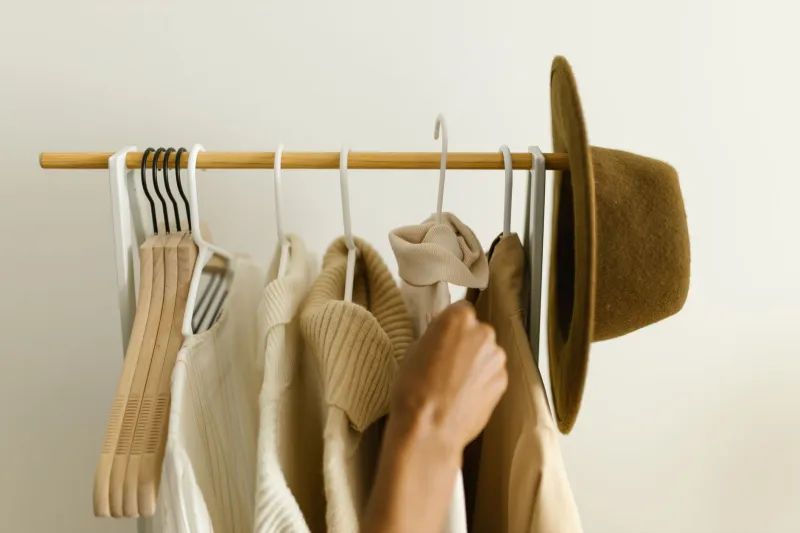
Every fall, the same ritual plays out in millions of American homes. Bins come down from the top shelf. Hangers get shuffled. Summer dresses get folded away like they've committed some kind of crime, and suddenly the closet gets divided into what's "allowed" right now and what has to wait its turn.
I used to do it too. And then I started paying attention to what actually happened to those boxed-up pieces — and more importantly, what I was actually reaching for day after day regardless of the season.
Spoiler: the seasonal divide is mostly made up. And it's quietly costing you money, closet space, and some of your best outfits.
Where the "Seasonal Clothes" Myth Comes From
The fashion industry runs on newness. New collections, new trends, new "must-haves" — and built into all of that is the implication that what you already own has some kind of expiration date stamped on it. Spring collections drop in January. Fall arrives in July. By the time you actually want to wear something, the industry has already moved on.
Retail thrives when you believe your wardrobe needs constant refreshing. Seasonal transitions are the perfect pressure point — they make you feel like your existing clothes are suddenly wrong, outdated, or simply out of place. So you shop. And the cycle continues.
But here's what nobody tells you: the clothes themselves don't know what month it is.
What a Real Closet Audit Actually Reveals
I've talked to a lot of intentional shoppers — people who've done the hard work of actually tracking what they wear and when. The patterns are pretty consistent, and pretty eye-opening.
Take a classic silk blouse. Conventional wisdom says it's a spring or summer piece. But in practice? It layers under a blazer in October, tucks into wide-leg trousers in February, and gets worn under a cozy cardigan well into November. The "summer" label was always arbitrary.
Or consider a light camel trench coat. It's technically a transitional piece, but for a lot of women in mild climates — think California, Texas, the Southeast — it's genuinely a year-round layer. Yet it gets treated like a seasonal item and disappears into storage for months at a time.
When you actually log your wear patterns over a full year, you start to see which pieces you reach for across multiple seasons and which ones you genuinely only use for a narrow window. That distinction — not the calendar — is what should drive your closet decisions.
The Pieces That Transcend the Calendar
So how do you identify which items deserve permanent rotation status? A few honest questions help cut through the noise:
Does the fabric work across temperatures with minor adjustments? A lightweight linen top might feel "summer only" until you realize it works beautifully under a chunky knit. A cashmere crewneck feels like fall, but it's equally at home on a cool summer evening or in an over-air-conditioned office in July.
Does it layer well — both under and over other pieces? Layering is the single biggest factor that extends a garment's seasonal range. If something works as a base layer, a mid-layer, or a standalone piece depending on the weather, it's not seasonal — it's versatile.
Does the color palette feel genuinely limited to one time of year? Pastels get branded as spring. Rich jewel tones get claimed by fall. But burgundy looks incredible in March, and powder blue is stunning in November. Color "rules" are suggestions at best, marketing at worst.
How often did you actually reach for it last year? Not how often you planned to wear it — how often you actually did. If a piece got worn eight times across six months, it's a workhorse. If it got worn twice during one specific event type, it might actually be the situational piece — not the seasonal one.
The Real Cost of the Storage Rotation
Here's something worth sitting with: every time you box up a piece and move it out of sight, you reset your relationship with it. Out of sight really does mean out of mind. When it comes back around, it often feels unfamiliar — and you end up shopping to fill a gap that was never actually there.
The women I know who've stopped doing seasonal rotations almost universally report that they shop less. Not because they have fewer clothes, but because they actually know what they own. Their closets aren't divided into "active" and "waiting" — everything is visible, everything is accessible, and they make smarter decisions about what to reach for based on actual weather and actual plans rather than arbitrary seasonal categories.
There's also a real financial argument here. The average American spends over $1,800 a year on clothing. A significant chunk of that spending happens at seasonal transitions — the "I need new fall pieces" or "I have nothing to wear in spring" moments that are largely manufactured by the belief that a wardrobe needs a quarterly refresh. When you stop treating your clothes like they expire, you stop buying replacements for things you already own.
How to Rethink Your Closet Without Overwhelming Yourself
None of this means you have to abandon all organization. If you live somewhere with genuinely dramatic seasonal swings — Minnesota winters, humid Southern summers — some practical storage adjustments make sense. The goal isn't chaos; it's intentionality.
What I'd suggest instead of the full seasonal swap:
Do a wear-frequency audit instead of a calendar audit. Go through your closet twice a year and ask what you've actually worn, not what "should" be in rotation right now. Move things based on use patterns, not dates.
Create a "test the assumption" pile. Pull out three to five pieces you've always treated as seasonal and actively look for ways to wear them outside their supposed window. You'll be surprised how often the limitation was purely mental.
Stop shopping the season and start shopping the gap. Before any purchase, ask what you actually don't have — not what the current season "calls for." Real gaps are about function and lifestyle, not trend cycles.
Let fabric guide storage, not marketing. Heavy wool coats might genuinely need to move to a less accessible spot in July. But a silk blouse, a tailored blazer, a great pair of dark-wash jeans? Those don't belong in a bin. They belong in your rotation, all year long.
The Bottom Line
Your wardrobe isn't a subscription service that needs to be refreshed every three months. The most stylish people I know — and the most financially savvy ones — treat their clothes like investments that compound over time, not inventory that turns over with the calendar.
The seasonal myth was never about dressing well. It was about selling more. And once you see it that way, it's a lot easier to put the storage bins away for good and start actually using what you already have.
Your clothes aren't waiting for their season. They're waiting for you to stop waiting.