What Your Closet Is Actually Telling You: How to Spot the Pieces You Were Always Meant to Wear

Here's something nobody really wants to admit: most of us don't actually know our own style. We think we do. We have the Pinterest boards. We save the Instagram outfits. We tell ourselves we're "classic with an edge" or "casual but put-together." But then we open our closets every single morning and reach for the same five things — and somehow, none of those things are the trendy blazer we convinced ourselves we needed last October.
That gap between what we think we love and what we actually wear? That's where your real signature style is hiding. And finding it is genuinely one of the most useful things you can do for both your wardrobe and your wallet.
Let's dig into it.
The Problem With "Aspirational" Dressing
When most people think about their style, they're thinking about who they want to be — not who they are on a random Tuesday in Cincinnati picking up coffee before a work call. That aspirational lens is beautiful and inspiring, but it's also responsible for about 60% of the unworn clothing sitting in your closet right now.
There's nothing wrong with having fashion ambitions. But when your aspirational self wears structured linen sets and your actual self lives in soft denim and oversized knits, buying more linen sets isn't going to move the needle. You'll just have more beautiful things you never touch.
The fix isn't to lower your standards. It's to get honest about your baseline — because that baseline is actually where your signature lives.
Run the Numbers (Seriously)
This is the part people skip because it sounds boring, but stick with me. For one week — just seven days — pay attention to what you actually put on your body. Not what you planned to wear. Not what you wish you'd worn. What you actually chose.
You can do this two ways:
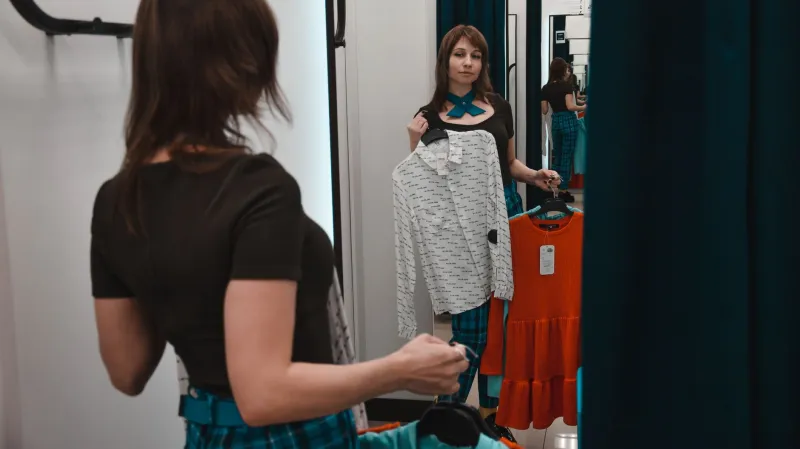
Option 1: The photo method. Take a quick mirror selfie each morning before you leave the house. Don't overthink it. At the end of the week, lay those photos out side by side.
Option 2: The note method. Keep a running note in your phone — just a few words per day. "Dark jeans, white tee, loafers." That's it.
After seven days, look for patterns. Are you always in a heel or always in a flat? Do you reach for color or neutrals? Fitted or relaxed? Layered or minimal? What textures keep showing up — denim, cotton, something with a little stretch?
This isn't about judging what you wear. It's about seeing what you actually gravitate toward when nobody's curating your choices for you.
Go Deeper With Your Closet
Once you've got a week of real data, take it back to your closet. Pull everything out — yes, everything — and sort it into three piles:
- The Regulars: Things you wear consistently, without much thought. These feel easy.
- The Occasionals: Things you wear for specific situations but genuinely love when you do.
- The Ghosts: Things that have been sitting there, untouched, slowly collecting guilt.
Now look at your Regulars pile. Really look at it. What do these pieces have in common? Is there a consistent silhouette — maybe everything is slightly relaxed through the hip? A recurring color family? A particular fabric weight? A heel height?
Those commonalities? That's your style fingerprint. That's the thing you've been doing instinctively all along, even when you were buying things that didn't match it.
Naming Your Anchors
Once you've identified the patterns, pick two or three specific pieces from your Regulars pile that feel like you at your most you. These are your anchor pieces — your true signatures.
Maybe it's a perfectly worn-in pair of straight-leg jeans that you've had for three years and would genuinely grieve if they disappeared. Maybe it's a certain kind of ribbed tank that you own in four colors without even realizing it. Maybe it's a leather belt that you put on almost every time you get dressed.
These anchor pieces are not boring. They are data. They are telling you exactly what your body, your lifestyle, and your instincts actually want from your wardrobe.
Write them down. Name them. "My signature is a slim dark denim, a soft neutral top, and something with a little hardware." Getting specific here is the whole point.
How This Changes the Way You Shop
Here's where this exercise pays off in real, practical dollars.
When you know your anchors, every future shopping decision gets a filter. Before you buy something, you ask: does this work with — or build on — my actual signature? Not your aspirational signature. Your real one.
That floral midi skirt that's everywhere right now? Beautiful. But if your anchor pieces are all straight lines and neutral tones, that skirt is going to become a Ghost faster than you think. You can admire a trend without letting it destabilize what actually works for you.
On the flip side, when you find something that does align with your anchors — a new version of that perfect silhouette, a different colorway of a texture you always reach for — you'll feel it immediately. That's the thing you buy without hesitation. That's the thing you'll actually wear.
Building a Wardrobe Around What's Already Working
Once you've identified your signature pieces and anchors, the goal isn't to freeze your style in place. It's to shop with intention instead of impulse.
Start by filling gaps that your anchor pieces actually need. If your signature move is a great trouser and a tucked-in top, ask yourself: do I have enough tops that tuck well? Do my trousers cover different levels of dressiness? Are there shoes missing that would make this formula work harder?
You're not building a capsule wardrobe in the traditional sense — you're reinforcing what already works for your real life, not a hypothetical one.
And here's the thing I love most about this process: it's incredibly freeing. When you stop chasing trends that don't align with your actual lifestyle and start investing in what genuinely fits the way you move through the world, getting dressed stops feeling like a problem to solve. It starts feeling like something that's already figured out.
Your Style Was Always There
The signature pieces you're looking for aren't somewhere out there in a new collection or on someone else's Instagram. They're already in your closet, probably a little rumpled from being worn so often.
All this audit does is make the invisible visible — and once you can see it clearly, you can build something intentional around it. Something that actually feels like you.
And that, honestly, is the whole point of getting dressed.