The $20 Fix That Makes a $50 Blazer Look Like It Cost $500
Let me tell you something that took me embarrassingly long to figure out. I used to spend hours hunting for the perfect pair of trousers — the ones that would hit exactly right, nip in at exactly the right spot, and make me feel like I actually had my life together. I'd return things, rebuy them in a different size, return those too. It was exhausting.
Then a stylist friend of mine watched me wrestle with a blazer at a sample sale and said, flatly, "Just get it tailored." I laughed it off like it was advice for someone with a different budget. She wasn't amused.
She was right. And honestly? That conversation changed everything.
Why Off-the-Rack Clothes Are Designed to Almost Fit
Here's the thing nobody tells you when you're standing under fluorescent lights in a fitting room: clothing manufacturers don't make clothes for your body. They make clothes for a statistical average. A size 8 is engineered around a set of measurements that might match you in the waist but not the shoulders, or in the hips but not the inseam. It's not a flaw in you. It's a flaw in the system.
Stylelist Mara Chen, who has dressed clients for everything from board meetings to magazine shoots, puts it bluntly: "Off-the-rack is a starting point, not a finished product. The women who always look polished? Nine times out of ten, they've had something altered. They're just not broadcasting it."
That invisibility is exactly the point. Tailoring is the secret that looks like natural confidence.
The Real Cost Breakdown (It's Not What You Think)
I know what you're thinking. Tailoring sounds expensive. So let's actually run the numbers, because the math here is genuinely surprising.
A basic hem on a pair of pants at most local tailors runs between $12 and $25. Taking in a blazer at the sides — the alteration that transforms a boxy jacket into something that looks custom — typically costs $30 to $60. Shortening a dress or skirt? Usually $15 to $30.
Now consider this: how many times have you spent $80 on a blouse you wore twice because something about it felt off? That vague discomfort — the slight bagginess at the back, the sleeves that were just a little too long — it's not in your head. And it's fixable for less than you'd spend on brunch.
I did a personal experiment last spring. I pulled five pieces from my closet that I almost never wore — a structured blazer, two pairs of trousers, a midi skirt, and a button-down shirt. Total original spend: around $340. I took them all to a local tailor and spent $95 getting them altered. Every single piece immediately entered my regular rotation. That's a $95 investment that essentially unlocked $340 worth of clothing I already owned.
The ROI on tailoring is, frankly, ridiculous.
What a Tailor Actually Does (And What to Ask For)
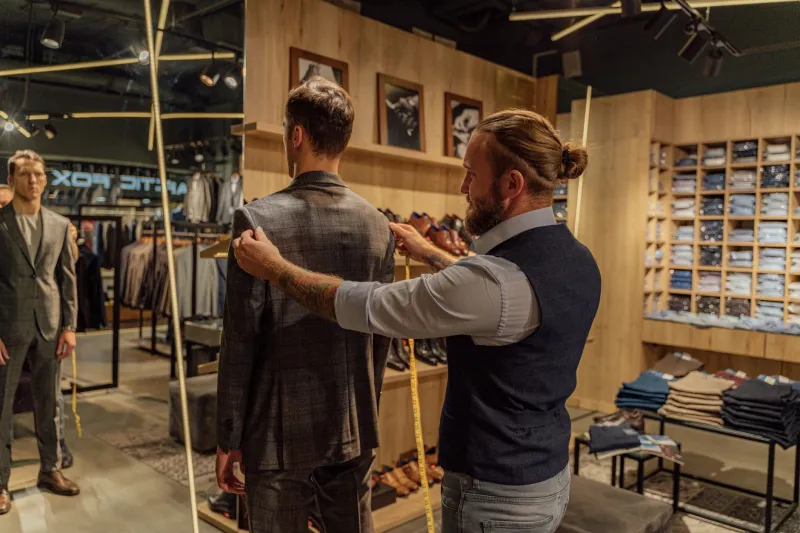
If you've never been to a tailor before, the experience can feel intimidating. You walk in, someone measures you, pins things, and speaks in terms you might not know. Here's a quick cheat sheet of the alterations worth knowing about:
Taking in the sides — This is the blazer game-changer. If a jacket fits your shoulders but swims at the waist, a tailor can bring in the side seams to create shape. This single alteration makes almost any blazer look intentional.
Hemming pants — The most common alteration and absolutely worth it every time. Pants that break correctly at your shoe completely change the visual line of your leg.
Shortening sleeves — Sleeves that are too long make you look like you borrowed someone else's clothes. This is a small fix with a huge visual payoff.
Darting a shirt — A boxy button-down can be given structure by adding or adjusting darts at the back. Suddenly it tucks better, sits better, and reads as intentional instead of shapeless.
Tapering trousers — Wide-leg pants can be narrowed. Straight-cut trousers can be slimmed. The silhouette you actually want is often hiding inside the silhouette you bought.
When you go in, don't be shy. Show the tailor what you're going for — bring a photo if it helps. Good tailors are collaborative, and they want the piece to work for you.
Before and After: What the Difference Actually Looks Like
I asked a few women in my community to share their tailoring transformations, and the responses were almost comically consistent. Every single one said some version of: I can't believe I waited this long.
One reader, Danielle from Atlanta, bought a $65 blazer from a fast-fashion retailer that she described as looking "like I borrowed it from my dad." After $45 in alterations — taking in the sides, shortening the sleeves — she said coworkers asked her where she'd bought her "new" jacket. She'd had it for two years.
Another reader, Priya from Chicago, had a pair of wide-leg trousers she loved in theory but never wore because the rise was slightly too high and the hem dragged. A $30 hemming job later, she wears them every other week.
This is the pattern. The clothes are usually good. The fit is just not there yet.
How to Find a Tailor You Can Trust
Not all tailors are created equal, and finding a good one is worth some effort. Ask for recommendations from friends, check Yelp or Google reviews specifically for alterations (not just dry cleaning), and bring a low-stakes piece first to test the work before you hand over anything precious.
A few things to look for: Does the tailor ask questions and actually look at how the garment fits on your body? Do they offer honest feedback rather than just agreeing to everything? Can they show you examples of their work? A confident tailor with good communication is worth a slightly longer drive.
Also — and this is important — a great tailor will tell you when something can't be fixed. If a jacket's shoulder seam doesn't sit correctly on your actual shoulder, no amount of side-seaming will save it. Learning to hear that is valuable information too.
The Confidence Multiplier Nobody Talks About
Here's what I've come to believe, after years of thinking about this: the reason well-tailored clothing makes you look more successful, more put-together, more intentional isn't just aesthetic. It's psychological.
When your clothes fit correctly, you stop thinking about them. You stop tugging at a hemline, adjusting a sleeve, wondering if the back looks weird. That mental energy gets redirected. You stand differently. You move differently. You're not managing your outfit — you're just wearing it.
That shift is real, and it's available to everyone. Not just people with big budgets or personal stylists. You, with your existing closet and a local tailor and a willingness to spend less than you'd spend on a facial.
Tailoring is the move that looks effortless because it removes all the effort. And honestly? It's time more of us started talking about it.


