10 Pieces, 30 Outfits, Zero Boredom: The Ultimate Wardrobe Remix Challenge
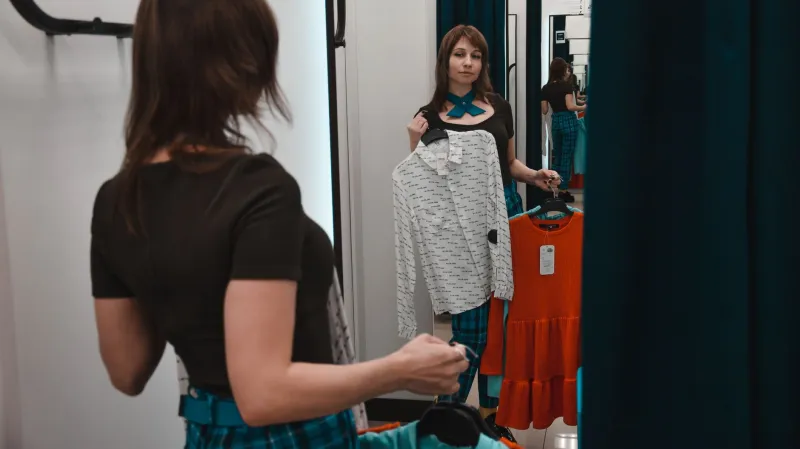
Here's a truth I keep coming back to: the most stylish people I know don't have the most clothes. They have the right clothes. And more importantly, they know exactly how to work what they've got.
That's the whole idea behind the Outfit Remix Challenge — a real, practical experiment in creative dressing that starts with a tight edit of 10 pieces and ends with a full month's worth of looks. No shopping required. No panic. Just strategy, a little creativity, and honestly? A lot of fun.
Let me walk you through exactly how it works.
The 10 Pieces You're Working With
Before we get into combinations, let's talk about why these specific pieces. Every item in the remix has to pull double (or triple) duty. That's the whole game. Here's the lineup:
- A white button-down shirt — oversized, crisp, slightly relaxed
- A fitted black turtleneck
- A pair of straight-leg medium-wash jeans
- Black tailored trousers
- A camel-colored blazer
- A slip dress in a neutral tone (think dusty rose or champagne)
- A cozy oversized knit sweater in oatmeal
- Black biker-style shorts
- A white tank top
- A denim jacket
Notice what's happening here: every single piece exists on a spectrum between casual and polished. That range is intentional. It's what makes the remix math work.
The Remix Logic: How to Think About Combinations
Most people approach getting dressed by asking, What goes together? The remix challenge flips that. Instead, you ask: What haven't I tried putting together yet?
The secret sauce is thinking in three layers:
- The base (what's closest to your body — tanks, turtlenecks, slip dress)
- The middle (your main statement piece — jeans, trousers, shorts, the slip dress worn differently)
- The outer layer (what finishes the look — blazer, denim jacket, knit sweater)
When you mix across those three layers systematically, you stop seeing "outfits" and start seeing a whole ecosystem of possibility.
Let's Build Some Looks
I'm not going to list all 30 here — that would take forever and honestly, half the fun is discovering combinations yourself. But let me show you a real cross-section so you can see how wildly different these looks actually feel.
Look 1: The Classic Power Move White button-down tucked into black trousers, camel blazer on top. Add a pointed-toe flat or a low heel. This is your interview, your presentation, your "I mean business" energy.
Look 7: The Off-Duty Model Oversized knit sweater half-tucked into straight-leg jeans, denim jacket tied around the waist. Sneakers. This is your Saturday-running-errands look that somehow still gets compliments at the coffee shop.
Look 12: The Unexpected Layering Moment Slip dress worn over the fitted black turtleneck, with black biker shorts peeking below and the camel blazer thrown on top. This one sounds chaotic — it's actually incredibly chic. The key is keeping everything in a tight color family.
Look 19: The Minimal Sleek Edit Black turtleneck tucked into black trousers. That's it. Monochrome dressing is one of the easiest ways to look expensive with zero effort. Add a gold chain and you're done.
Look 24: The Casual-Luxe Hybrid White tank layered under the open button-down (worn like a topper), paired with the slip dress used as a skirt — yes, really. Tuck it up, belt it, let it fall naturally. The denim jacket finishes it off and keeps the whole thing from feeling too precious.
Look 30: The Full Circle Moment You're back to basics — but you earned it. Oatmeal knit sweater, straight-leg jeans, white tank visible at the collar. Simple, warm, completely put-together. After 29 other looks, this one hits different.
The Accessories Multiplier Effect
Here's where people leave serious styling points on the table: accessories aren't afterthoughts, they're amplifiers. The same base outfit styled with chunky gold hoops versus a silk scarf tied at the neck versus a baseball cap reads as three completely separate looks to the human eye.
For this challenge, I'd suggest keeping a small rotating accessory pool:
- Two pairs of earrings (one minimal, one statement)
- A belt (thin black or brown leather)
- One silk scarf
- One baseball cap or knit beanie depending on season
- Two shoe options (a sneaker and something with a heel or pointed toe)
That small pool alone can multiply your 30 looks into something closer to 60. But we're not trying to overwhelm anyone here.
Why Limitation Is Actually the Best Creative Partner
I'll be honest — when I first started thinking about this challenge, my instinct was to add more pieces. A fifth top, another bottom option, one more layer. But every time I resisted that urge, the combinations got better, not worse.
Constraint forces intentionality. When you can't just grab something new, you look harder at what you have. You start noticing that the slip dress works as a skirt. That the oversized shirt becomes a layer instead of a top. That the blazer looks completely different belted over a sweater than it does open over a button-down.
This is the creative muscle the challenge is actually building. It's not about getting dressed for 30 days — it's about rewiring how you see your wardrobe permanently.
How to Actually Do the Challenge
Ready to try it yourself? Here's how to start:
Step 1: Pull 10 pieces from your own closet using the same logic — pieces that span casual to polished and work across multiple categories (top, bottom, layer).
Step 2: Photograph each piece individually so you can see what you're working with without digging through your closet every morning.
Step 3: Start combining. Don't overthink it. Put things together that feel slightly wrong — that's usually where the best outfits live.
Step 4: Document your looks. Even a quick mirror selfie counts. Seeing them side by side after a week is genuinely motivating.
Step 5: Notice what you reach for most and what combinations surprised you. That data? It's telling you exactly what to buy (and what to skip) next time you shop.
The Outfit Remix Challenge isn't about deprivation. It's about discovering that your style is so much more elastic than you've been giving it credit for. And once you see that — once you really see it — you'll never look at your closet the same way again.