The Pieces That Never Leave: A Love Letter to the Items Worth Every Penny
Some Clothes Just Don't Leave
Ask any woman with genuinely great personal style about the oldest thing in her closet. She'll probably light up a little before she answers. There's a cashmere turtleneck she bought in 2009 that still goes on a rotation every October. A pair of perfectly cut wide-leg trousers that have survived four apartment moves and two complete wardrobe overhauls. A leather belt that cost more than she was comfortable spending at the time and has since become the thing she reaches for without thinking.
These pieces don't survive by accident. They survive because something about them is fundamentally, undeniably right — in a way that seasonal trends can't touch.
Learning to recognize those pieces before you buy them, rather than after ten years of wearing them, is one of the most worthwhile style skills you can develop. And it starts with understanding what actually makes something last.
What "Timeless" Actually Means (It's Not What You Think)
Timeless doesn't mean boring. That's the misconception that keeps a lot of people from investing in the things that would genuinely serve them longest.
A timeless piece isn't a plain white t-shirt by default. It's a piece that has such a clear, confident point of view that it never needs a trend to justify it. It can be a slightly dramatic sleeve. An unexpected texture. A color so specific it feels like a signature. The quality that makes something timeless is internal coherence — it knows exactly what it is, and it doesn't apologize for it.
Trend-dependent pieces, by contrast, are ones whose appeal relies on context. They work because everyone is wearing that silhouette right now. They work because that color is everywhere this season. Take away the moment, and the piece loses its charge. That's not a judgment — those pieces have their place. But they're not the ones worth splurging on.
The Pieces Fashion-Savvy Women Refuse to Give Up
There are certain categories that come up again and again when you ask women with enduring personal style about the non-negotiables in their closets.
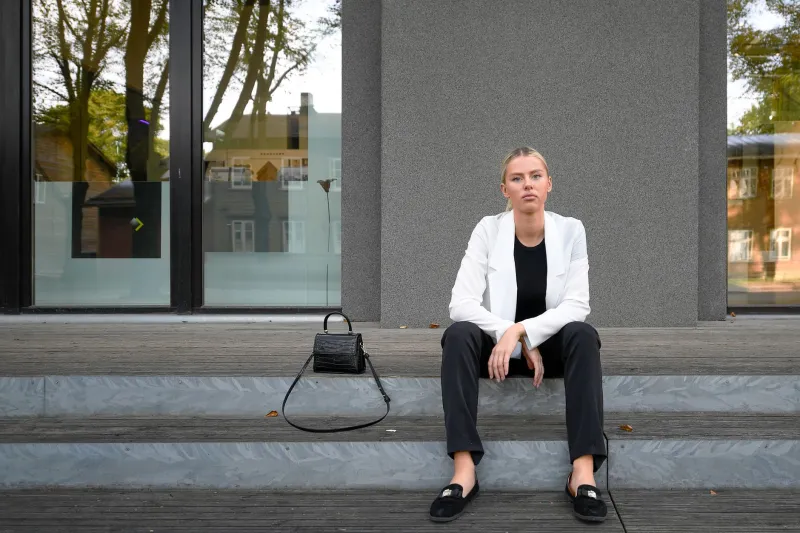
A well-cut blazer in a neutral or near-neutral. Not a trendy oversized blazer from a fast fashion haul — a blazer with actual structure, real lining, and a silhouette that hits at the right place on the hip. Navy, camel, cream, deep charcoal. Women who've had theirs for a decade will tell you it's been to job interviews, gallery openings, first dates, and casual Saturdays. It goes everywhere because it means something.
A quality leather or leather-look bag in a classic shape. The structured tote. The simple crossbody with a clean flap. The bucket bag that's been around since before your mother was in college. Shape matters more than brand here. A well-proportioned bag in quality material becomes part of your visual signature in a way that logo-heavy pieces rarely do.
Straight or wide-leg trousers in a fabric with weight. Not every wide-leg moment is created equal. The ones that last are cut from fabric that moves with intention — a wool blend, a heavyweight crepe, a structured cotton. These trousers have survived the skinny jean era, the jegging era, and every other era that declared pants-with-structure over. They're still here.
A silk or silk-feel blouse in a color you love. Not a trendy print. Not a micro-seasonal colorway. A color that is genuinely, deeply yours — the one that makes people say you look different (in the best way) when you wear it. A well-made blouse in that color will outlive every fast fashion version of itself.
Good boots with a heel height that actually works for your life. Not the highest heel you own. Not the chunkiest platform of the season. The boot you can actually wear for eight hours without misery, with a heel height that works whether you're standing in line or sitting across a dinner table. Those boots go with everything because they're designed to be lived in, not just photographed.
The Investment Mindset Shift
Here's the reframe that changes how spending on clothes feels: cost-per-wear.
A $400 blazer you wear 80 times over five years costs you $5 per wear. A $60 trend piece you wear twice costs $30 per wear. The math is almost always in favor of the thing you'll actually keep — but only if you buy the right thing.
The trap is spending investment-level money on trend-dependent pieces. Dropping $300 on a statement coat that only works during one very specific cultural moment is not an investment — it's just an expensive impulse buy. The investment mindset only pays off when it's applied to pieces with genuine staying power.
The question to ask yourself before any significant purchase: Would I still want this if no one else was wearing it? If the honest answer is yes, you're probably looking at something worth the spend.
How to Identify Your Own Keepers Before They've Proven Themselves
The pieces that end up being the long-haul ones tend to share a few common traits:
They fit without compromise. Not "I could get this tailored" or "it works if I wear it a certain way." They fit in a way that feels immediate and right. If you have to convince yourself the fit is fine, it probably isn't.
They feel like you, not like a costume. The best long-term pieces feel like an extension of your existing identity, not a departure from it. If you're trying something on and thinking this is so not me but maybe I should branch out, that's a flag. Genuine style expansion feels exciting, not uncomfortable.
They work in at least three distinct contexts. The blazer goes to work, to dinner, and to the farmers market. The trousers work dressed up and dressed down. If you can only picture a piece in one very specific scenario, it has a limited lifespan in your wardrobe.
The quality is visible. You don't have to be a textile expert. You just have to pay attention. Does the fabric feel substantial? Are the seams straight? Does the hardware feel solid? Does it hold its shape when you hold it up? These are things you can assess with your hands and eyes without any specialized knowledge.
A Wardrobe Built to Last
Chasing trends isn't inherently wrong — it's part of what makes fashion fun, and there's real joy in participating in a cultural moment through what you wear. But a wardrobe built entirely around trend participation is exhausting, expensive, and ultimately unsatisfying.
The women who always look like themselves — the ones whose style you'd recognize anywhere — aren't the ones with the most clothes or the most current pieces. They're the ones who've found their keepers and built everything else around them.
That blazer from 2009. Those trousers that survived four moves. The belt that cost too much and was worth every cent.
Your version of those pieces is out there. And when you find them, hold on.