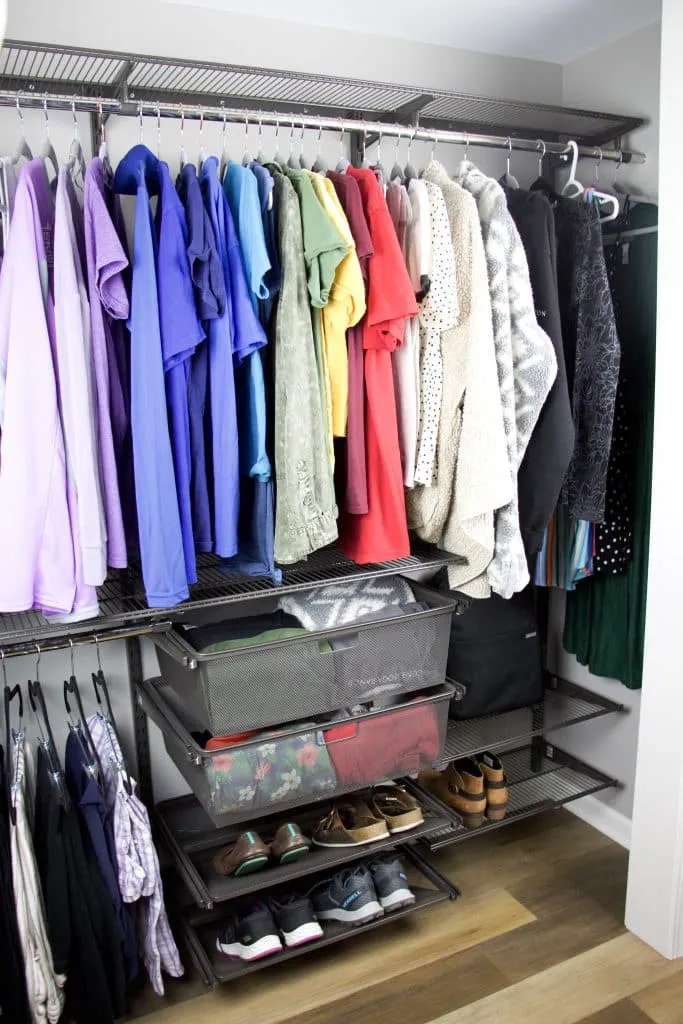
Same Clothes, Completely Different Vibe: The Season-by-Season Restyling Playbook

Every September, something happens. I open Instagram and suddenly everyone is talking about fall capsules, transitional pieces, and the coats they're buying before they sell out. And every September, I feel that little pull — the one that says your wardrobe isn't ready for this season.
Here's the truth I keep coming back to: that feeling is almost never accurate. What I actually need isn't new clothes. I need a new perspective on the ones I already have.
This isn't about deprivation. It's about getting genuinely creative with what you own — and realizing that your wardrobe has way more range than you're currently using.
The 'I Have Nothing to Wear' Lie
We've all said it. Standing in front of a full closet, genuinely convinced there's nothing in there that works. But what we're really saying is: I can't figure out how to make this work for right now.
That's a styling problem, not a shopping problem.
The seasonal style rut happens because we associate specific pieces with specific contexts. That floral slip dress is a summer dress. Those linen trousers are warm weather pants. That oversized blazer is for fall. Once we mentally file something away as seasonal, we stop seeing its potential outside that box.
Breaking those mental associations is the first and most important step in refreshing your wardrobe without refreshing your credit card balance.
The Layering Pivot: Summer Pieces in Cold Months
Layering is the most powerful restyling tool you have, and most people are using it at about 20% capacity.
That floral slip dress? It becomes a completely different outfit when you pull a fitted turtleneck underneath it, add opaque tights, and swap the sandals for ankle boots. You're not wearing a summer dress in November — you're wearing a layered midi look that reads as intentionally autumnal. The dress is just doing a different job.
Same principle applies to your tank tops and camisoles. In summer, they're standalone. In fall and winter, they're base layers. A silky camisole under a blazer with tailored trousers hits completely differently than it does with cutoffs in July. The piece hasn't changed. The context has.
A few layering combinations worth trying:
- Sundress + fitted long-sleeve underneath — works especially well with wrap or shirt-style dresses
- Linen shorts + tall boots + oversized knit — sounds unexpected, works surprisingly well for early fall
- Sleeveless top + button-down left open as a layer — transitions a summer look into something more structured
- Lightweight summer pants + chunky sock + loafer — the visible sock does more seasonal work than you'd think
The Accessory Pivot: Same Outfit, Different Season
If layering is the foundation of seasonal restyling, accessories are the finishing move. Swap the accessories on an outfit and you can shift it from beachy to urban to cozy without changing a single clothing item.
Consider a simple white button-down and straight-leg jeans. In summer, you're wearing it with espadrilles, a straw tote, and gold hoops. In fall, it's a camel wool scarf, leather loafers, and a structured crossbody. In winter, throw a longline coat over it and add knee-high boots. In spring, bring in a printed silk scarf tied at the neck, white sneakers, and a rattan bag.
Same two pieces. Four completely distinct looks. Zero new purchases.
The accessories doing the most seasonal heavy lifting:
Scarves — arguably the highest-impact accessory pivot available. A chunky knit scarf signals winter. A silk square says spring. A printed cotton wrap reads summer. One outfit, three seasons, just from the neck up.
Bags — a woven or canvas bag reads warm weather; a structured leather bag or suede tote reads fall and winter. If you're working with a limited bag collection, lean into this distinction.
Shoes — this is the most obvious but also most underused lever. The same midi skirt in a sandal, a mule, an ankle boot, and a knee-high boot is four different outfits across four different temperatures.
Jewelry weight and finish — delicate gold pieces feel summery and light; chunky silver or layered chains feel more fall/winter. This is subtle, but it adds up.
Proportion Shifts: The Styling Move That Changes Everything
Here's one that most people don't think about consciously, but stylists use constantly: changing the proportion of an outfit shifts its entire energy.
The same oversized blazer reads completely differently depending on what it's paired with. In summer, it's thrown over a bralette and bike shorts with sneakers — relaxed, street-style cool. In fall, it's belted over a turtleneck with wide-leg trousers — structured and intentional. In winter, it's layered under a long coat, acting as a middle layer — cozy and editorial.
Similarly, tucking versus untucking a shirt changes the entire silhouette. A half-tuck creates a casual, effortless vibe. A full tuck into high-waisted pants reads more polished. Leaving a shirt completely untucked over wide-leg trousers creates a relaxed, oversized proportion that feels very current.
Play with these variables before you assume you need something new:
- Tuck vs. untuck
- Belted vs. unbelted
- Cropped layer vs. longline layer
- High-rise vs. low-rise (if your collection allows)
- Tucked into vs. layered over
Color Combinations That Cross Every Season
One of the sneakiest ways to make your wardrobe feel fresh is to break out of the color combinations you've defaulted to. Most of us have a handful of pairings we go back to automatically — and we stop seeing the other possibilities sitting right in front of us.
A few combinations worth experimenting with across seasons:
Camel + white — this reads crisp and fresh in spring, clean and summery in warm months, sophisticated and autumnal in fall. It's a year-round pairing that never looks wrong.
Burgundy + blush — unexpected and warm, it works in fall and winter but also feels surprisingly fresh in spring.
Navy + olive — a combination that reads outdoorsy and grounded. Works in every season depending on the textures you pair it with.
Black + camel — a classic that spans every season. The secret is letting texture do the seasonal work: linen in summer, wool in winter.
Cobalt + white — bright and graphic, it reads summer in cotton and spring in silk, but also works in fall when you add a camel coat over the top.
The Practical Reset: How to Actually See Your Closet Differently
All of this sounds great in theory, but actually putting it into practice requires a bit of structure. Here's a simple exercise that I come back to at the start of every season:
Pull out 10 pieces you haven't worn recently. Set them on your bed. Now, without adding anything new, try to build three outfits from those pieces that you wouldn't normally put together. Use the layering, proportion, and accessory pivots we talked about. Take photos of the combinations that work.
You'll almost always find at least one outfit you genuinely love that you'd been completely blind to. That's not a small thing — that's effectively a free shopping trip.
The goal isn't to never buy anything new. Shopping is genuinely fun, and finding a piece you love is one of life's small pleasures. But the I have nothing to wear panic? That's almost always a creativity gap, not a wardrobe gap. And creativity, unlike a new coat, doesn't cost a thing.