Stop Shopping Until You've Done This: The Closet Reset That Pays for Itself
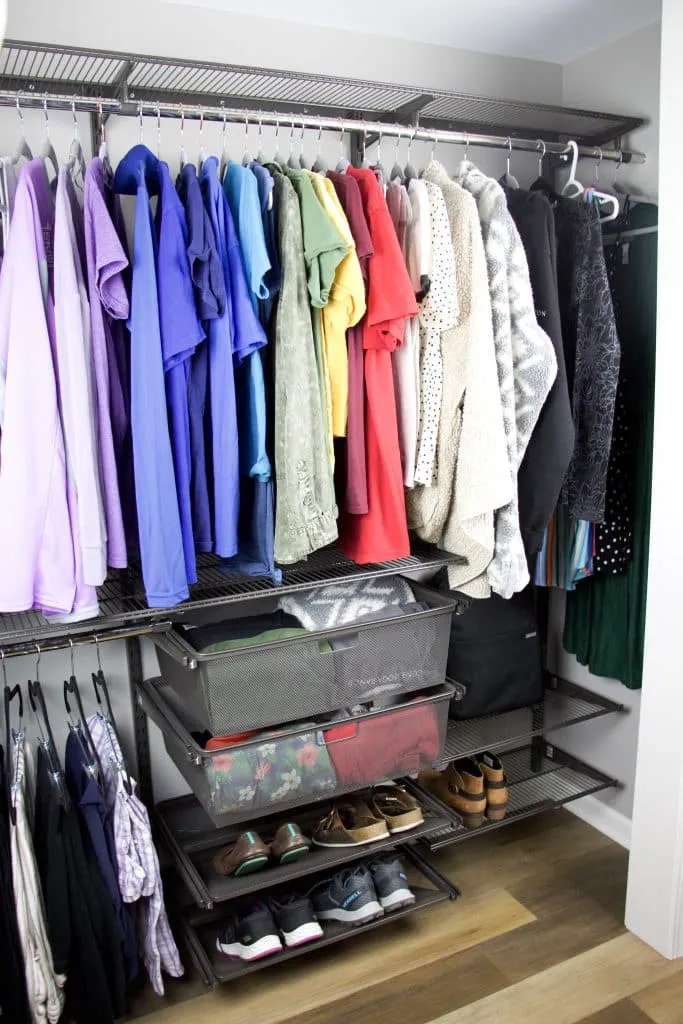
Photo: woman organizing colorful clothing on rack in bright bedroom closet, via www.theorganizedmama.com
Real talk: most of us are shopping to fill a feeling, not a gap. You open your closet, feel that vague sense of nothing to wear, and the next thing you know you've got three new items in your cart and a mild case of buyer's remorse before they've even shipped.
I've been there. A lot of people in this community have been there. And the fix isn't more willpower or a strict shopping ban — it's actually getting honest about what you already own.
This is the closet audit. It sounds tedious. It kind of is, at first. But the Angela Boyd readers who've done it consistently report the same thing: they find things they forgot they owned, they stop buying duplicates of stuff they already have, and they start getting dressed with way less stress. One reader, Priya from Houston, called it "basically finding $800 in my own closet."
Let's do it.
Step One: Pull Everything Out (Yes, Everything)
This is non-negotiable and also the step most people try to skip. Don't. You cannot audit what you can't see, and our brains are remarkably good at forgetting what's shoved to the back of a shelf or buried under a pile.
Clear your bed or a large floor space. Pull out every item of clothing you own — every drawer, every shelf, every "maybe someday" bin in the back of your closet. Lay it all out where you can see it.
Before you start sorting, just look at it for a minute. Notice what surprises you. Notice what you'd forgotten you owned. Notice what you immediately want to put back on. Those gut reactions are data.
Prompt to try: As you pull things out, make three piles: things you're genuinely excited to see, things you feel neutral about, and things you forgot you owned. Don't make any decisions yet — just observe.
Step Two: Ask the Hard Questions
Now it's time to go through each item with some honest self-interrogation. Not brutal, not Marie Kondo–style tearful — just honest. Here are the questions worth asking:
- Have I worn this in the last 12 months? If not, why not? Is it a fit issue, a comfort issue, a "waiting for the right occasion" issue?
- Does it fit me right now, in my actual body? Not the body you had three years ago, not the body you're working toward — the one you have today.
- Is it in good condition? Pilling, stretched-out elastic, faded color, missing buttons — these things matter and they're why a lot of pieces get avoided without us consciously registering why.
- Do I own three of these? Seriously. How many black long-sleeve tops do you have? How many pairs of dark jeans? Duplicates are sneaky — they happen because we forget what we own and buy the same thing again.
Prompt to try: For anything in your "neutral" pile, ask: if I saw this in a store today, would I buy it? If the answer is no, that's a signal.
Step Three: Identify the Real Gaps (Not the Imaginary Ones)
Here's where most closet audits go sideways: people use the process to justify a shopping trip instead of actually solving a problem.
A real gap is something functional that's missing — a pair of black trousers that fit properly, a warm layer for transitional weather, a white top that actually works under things. An imaginary gap is "I need more options" when you have 47 tops and only wear six of them.
After you've sorted through everything, look at what remains and ask: what occasions or needs are genuinely not covered by what I own? Write that list down. Be specific. "A blazer" is not specific. "A lightweight, unstructured blazer in a neutral that I can wear to client meetings and also dress down on weekends" is specific.
That list is the only shopping list that's allowed to exist right now.
Prompt to try: Before writing anything on the gap list, try to style what you already own to fill the need first. Can't find a solution? Then it's a real gap.
Step Four: Rediscover What You Already Have
This is the fun part and also the part that tends to blow people's minds a little.
Take the pieces you've kept and try them in combinations you've never attempted. Put the blazer with the dress you've only worn to weddings. Try the structured bag with the casual weekend outfit. Layer the button-down under the sweater you always wear alone.
Angela Boyd community member Keisha from Philadelphia did this exercise and discovered she'd been ignoring a silk midi skirt for two years because she'd mentally filed it as "too fancy." "I tried it with a vintage band tee and sneakers and I almost cried," she said. "It was the best outfit I've worn in months and I didn't spend a single dollar."
That's the whole point. Your closet is probably more versatile than you're giving it credit for. You just haven't had the mental space to see it because it's been buried under things you don't actually wear.
Step Five: Handle the Outgoing Pile With Intention
Everything that's leaving your closet deserves a good landing spot. Here's a quick breakdown:
- Good condition, not your style: Sell on Poshmark, ThredUp, or Depop. Actual money back in your pocket.
- Good condition, loved: Donate to a local shelter, mutual aid clothing drive, or Buy Nothing group.
- Worn out: Textile recycling programs (H&M and Patagonia both have them) keep fabric out of landfills.
Don't let the outgoing pile sit in bags by your door for six months. Set a deadline — two weeks — to get it out of your space.
The Mindset Shift That Makes This Stick
The closet audit is a one-time reset, but the real goal is changing how you relate to your wardrobe going forward. And that starts with one mental reframe: your closet is a curated collection, not a storage unit.
A curated collection has intention behind it. Every piece earned its place. You know what's in it, you know how everything works together, and adding something new is a considered decision — not a response to boredom or a bad day or a really compelling Instagram ad.
Decision fatigue is real, and a cluttered closet feeds it. When you open your closet and see only things you genuinely like and actually wear, getting dressed stops being a source of low-grade stress and starts being something that sets the tone for your whole day.
That shift? It doesn't cost anything. And it might just be the best style upgrade you make all year.